

In 2019, I was in Melbourne, finishing my preventive mental health fellowship at Monash University. I was working on research into the effectiveness of psychological interventions for postpartum depression. My days moved between the university library, meetings with supervisors, and lecture halls. I was happy.
That year, a friend from Saudi Arabia called me. He offered me a stake in a small real estate opportunity. I knew nothing about real estate. I laughed and told him: "I'm a physician and a researcher — why are you calling me?" He said a sentence I didn't understand at the time: "Because you think differently."
I entered the deal with a modest amount and no expectations. I came out of it fourteen months later with a good profit — and with something else I hadn't counted on: I discovered a part of myself I had never known.
The part I didn't know
I used to think my only pleasure in life was scientific research. To sit with a blank page, read a study, analyze data, write a hypothesis. That's what I was raised on academically, and that's what I believed was my identity.
In that deal I discovered something different: the same pleasure — the pleasure of analysis, of taking things apart and connecting the threads — exists in real estate development, but at a different speed and under different pressure.
In scientific research, you take years to test a hypothesis. In a deal, you take weeks. In research, the result is a published paper. In a deal, the result is land that became a project and real people whose lives changed. The essence is one; the rhythm is different.
The mistake I made
After returning to Saudi Arabia in 2020, I tried to keep the two sides separate. The university in my morning, real estate in my evening. Medicine in one box, development in another. I thought the separation protected me.
I was wrong.
In one deal, I sat with a group of partners around a table in Riyadh. The discussion was about a project of considerable value, and the parties were tense. One partner started raising his voice. Another began to withdraw. A third stared at the table. In that moment, I wasn't seeing a real estate deal. I was seeing what I had studied for years: pressure dynamics, response patterns, avoidance signals.
I spoke calmly, stopped the discussion, and redirected it. An hour later, we walked out with an agreement.
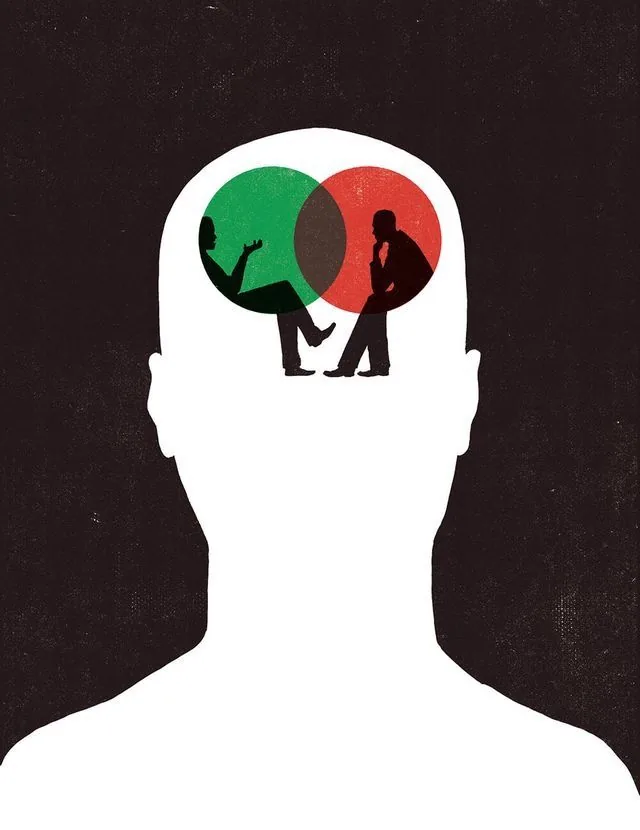
On the way back I understood: the two sides don't need to be separated. The two sides complete each other.
What I learned
I learned that a scientific background in understanding behavior is not a luxury I carry alongside my real estate work. It is a daily working tool. It helps me read the negotiation before entering it, understand the partner before signing, see the person hesitating before he says it himself.
And in the other direction I learned something more important: field work in real estate made me a better researcher. I understood that theory without friction against reality stays incomplete. Now when I read a paper in decision science, I read it with the faces of real investors in my mind, not hypothetical cases.
For whoever lives between two worlds
If you are in a position that joins two specialties you think are far apart, stop trying to separate them. The separation is an illusion. What looks to you like distraction may in truth be the advantage no one else has.
I no longer apologize for being a physician who works in real estate, nor for being a developer who writes scientific research. These are not two contradictory sides of my life. This is one way of thinking, showing up in two places.
I thought I only wanted to be a scientist. I discovered I want to be someone who thinks scientifically — wherever I am, whatever the work.